
A beautiful entryway is nice. A functional one is life changing.
If your front door area tends to collect shoes, backpacks, pet gear, keys, and unopened mail, the problem usually is not a lack of effort. It is a lack of a system. The best entryway organization ideas work because they match how your household actually moves through the space every day.
That matters more than most people realize. According to a 2025 Consumer Reports article featuring professional organizers, the entryway should hold the things your family uses on a daily or near daily basis. And according to a 2026 Cleveland Clinic article on decluttering and mental health, cluttered spaces can increase feelings of stress and anxiety, while tidying creates a greater sense of control.
For most homes, the fastest way to fix entryway chaos is to start with five essentials:
- A place to sit
- A place to hang coats and bags
- A place to store shoes
- A place to drop small everyday items
- A place to hide the overflow
When those five zones are built into the room, the space becomes easier to maintain and far more welcoming.
Start with function, not decor
The biggest entryway mistake is trying to decorate before solving the traffic pattern.
Think about what lands near the door every single day. Coats. Shoes. Purses. Backpacks. Dog leashes. Mail. If those items don’t have obvious homes within arm’s reach, they end up on the floor, the table, or the nearest chair.
That’s why organizers consistently recommend designing around habits. In a 2026 Good Housekeeping feature on functional entryways, professional organizers highlighted designated spots for purses, shoes, baskets, and small drop zone items as the features that make an entryway easier to maintain day to day.
A practical way to plan your entryway is to ask:
- What gets dropped here first
- What needs to be grabbed on the way out
- What causes the mess most often
- What should stay visible
- What should be hidden
Answer those questions first. Then choose storage.
The most effective entryway storage solutions
Built-in benches with hidden storage
A bench earns its keep in an entryway because it solves two problems at once. It gives you a place to sit while putting on shoes, and it creates storage below.
The most useful bench setups include:
- Lift up seating for seasonal gear
- Deep drawers for shoes or pet supplies
- Open cubbies for grab and go baskets
- Durable surfaces that are easy to wipe down
If your family removes shoes at the door, bench storage is one of the simplest ways to prevent piles from spreading into the rest of the house.
Hooks at the right height
Hooks work because they are quick. People are far more likely to hang a bag or jacket than place it neatly on a hanger behind a closed door.
For the best results, use more hooks than you think you need and install them based on who uses the space:
- Adult hooks for coats and bags
- Lower hooks for kids
- A dedicated hook for the dog leash
- A separate hook for umbrellas or hats
This small detail makes the system easier to follow, especially during rushed mornings.
Shoe storage that matches your household
Shoe clutter is one of the biggest causes of an unorganized entryway. The fix is not always a larger rack. It is the right type of storage.
Try these options based on your needs:
- Open shelves for quick access
- Closed cabinets for a cleaner look
- Individual cubbies for each family member
- Baskets for sandals, slippers, or sports shoes
- A tray for wet or muddy shoes
If your home has limited square footage, vertical storage matters. Narrow cabinets and stacked cubbies can keep shoes contained without taking over the walkway.
A dedicated drop zone for small essentials
Keys, sunglasses, wallets, earbuds, and mail need a landing place. Without one, they migrate.
A simple drop zone can include:
- A shallow drawer
- A slim shelf
- A tray on top of a cabinet
- A wall organizer with a small ledge
The goal is visibility without clutter. One contained surface works better than a wide open console that invites random piles.
Closed storage for visual calm
Open storage is great for frequently used items. Closed storage is what keeps the room from looking busy.
Cabinet doors help conceal:
- Reusable shopping bags
- Extra shoes
- Sports gear
- Cleaning supplies
- Seasonal accessories
- Pet items
This is especially helpful in smaller entryways, where even a few visible items can make the whole area feel crowded.
Smart layout ideas for different entryway sizes
Small entryway
A small entryway can still work beautifully if every inch has a purpose.
Focus on these space saving ideas:
- Wall hooks instead of a freestanding coat rack
- A narrow bench with storage underneath
- Vertical cubbies
- A floating shelf for keys and mail
- Closed upper cabinetry if ceiling height allows
This is where custom design makes a real difference. A standard piece of furniture may almost fit. A custom solution is designed to fit precisely.
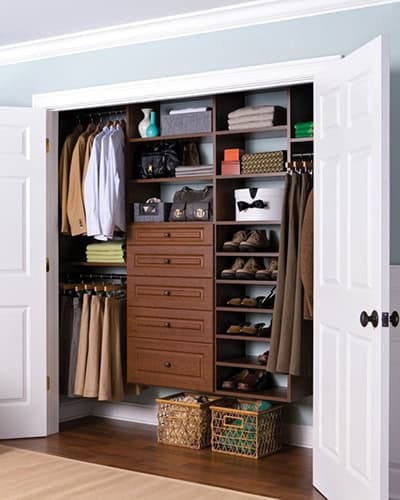
For compact areas, custom reach in closets from Pro Closet & Cabinetry show how adjustable shelving, drawers, rods, and shoe storage can maximize limited space without crowding the room.
Busy family entryway
If multiple people use the same door every day, assign zones by person.
That might look like:
- One cubby per child
- One basket per person
- Labelled hooks
- A family calendar or message board nearby
- A hamper or bin for items that need to go elsewhere
Personal zones reduce decision fatigue. Everyone knows where their things go, and cleanup becomes faster.
Mudroom style entryway
If you have room for a larger setup, think beyond basic furniture and create a true mudroom function.
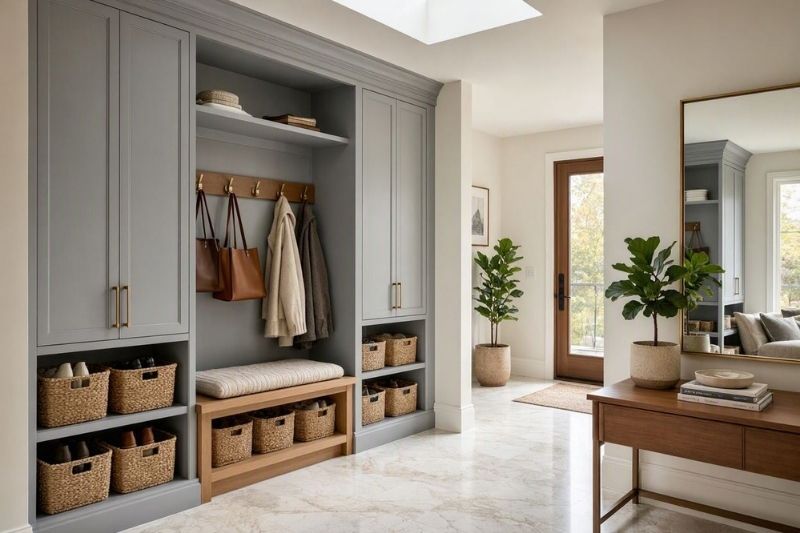
The best mudroom style entryways often include:
- Full height cabinetry
- A built in bench
- Shoe cubbies
- Hooks
- Drawers
- Overhead storage
- Easy clean materials
Pro Closet & Cabinetry’s custom mud room solutions are especially useful for households that want tailored storage, durable materials, and a layout designed around real daily use. The company also notes that even small spaces can support smart features like open shelving, compact lockers, and wall mounted storage.
What to keep in the entryway and what to move elsewhere
One of the best ways to keep an entryway organized is to limit what belongs there.
Keep these items in the entryway:
- Daily shoes
- Current season coats
- Everyday bags
- Keys and wallets
- Pet walking essentials
- Mail that needs immediate action
Move these items elsewhere:
- Off season outerwear
- Bulk paper storage
- Rarely used bags
- Overflow shoes
- Holiday accessories
- Miscellaneous household clutter
This edit matters. According to the National Association of Realtors 2025 Remodeling Impact Report press release, homeowners value remodeling projects that improve functionality and livability, and closet renovation was among the highest projects for cost recovery at 83 percent. Storage that improves everyday use is not just convenient. It is one of the clearest ways to make a home work better.
Why custom entryway storage outperforms one size fits all furniture
Store bought entryway pieces can help, but they often fall short in real homes. They may be too shallow, too wide, too short, or missing the exact mix of hooks, drawers, and shelves your family needs.
Custom storage works better because it is built around:
- Your wall dimensions
- Your ceiling height
- Your family size
- Your daily routine
- Your style preferences
- Your storage pain points
That is where Pro Closet & Cabinetry stands out.
As a family run company serving North Central Florida, Pro Closet & Cabinetry takes a personalized design approach instead of offering generic storage fixes. Their work emphasizes craftsmanship, careful installation, durable materials, and storage plans tailored to how each client actually lives.
That matters in high use spaces like entryways, mud rooms, and adjacent utility areas. In fact, in their article on choosing cabinets for a mud room or laundry room, the team emphasizes planning around daily routines, storage needs, and humidity resistant materials for Florida conditions.
If your entryway blends into a laundry zone or utility corridor, custom laundry room cabinets can also add hidden storage, pull out hampers, folding space, and vertical cabinetry that keeps clutter off the floor and counters.
A simple formula for an entryway that stays organized
If you want an entryway organization system that lasts, use this formula:
Visible for daily use + hidden for visual calm + custom fit for your space
In practice, that means:
- Hooks for fast drop off
- Bench seating for comfort
- Shoe storage near the door
- A small tray or drawer for essentials
- Closed cabinets for the extras
- A layout built around your family’s habits
That combination is what turns a clutter magnet into a space that supports your routine.
Ready to create an entryway that works harder
A well organized entryway does more than look nice. It saves time, lowers stress, and makes the first and last few minutes of the day feel easier.
If your current setup is not working, the answer may not be more bins or another temporary fix. It may be a better design.
Pro Closet & Cabinetry creates custom storage solutions that are built for real homes, real routines, and real families. Whether you need a compact drop zone, a full mud room, or connected storage that flows into bedroom closets, their team can help you create a space that feels organized, polished, and easy to live with.